.png?h=790&iar=0&w=1920&hash=EE76199070B8196AFE13C69F8B066839)
STAR-CCM+ the solution for engineering innovation with CFD-focused multi-physics simulation
Accurately predicting the real performance of a product requires simulation tools capable of capturing all the physical parameters that influence its behavior throughout its operational life, including those that cross the boundaries of traditional design disciplines.
Simcenter STAR-CCM+ enables the integration of automated design analysis and optimization capabilities into any engineer’s simulation toolkit, allowing the entire design space to be explored effectively and efficiently, rather than focusing on isolated, point-in-time design scenarios.
Simcenter STAR-CCM+ enables the integration of automated design analysis and optimization capabilities into any engineer’s simulation toolkit, allowing the entire design space to be explored effectively and efficiently, rather than focusing on isolated, point-in-time design scenarios.
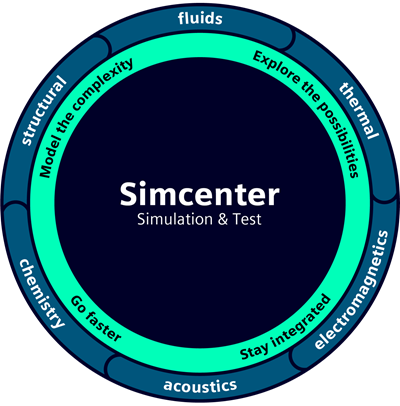
Simcenter STAR-CCM+ is one of the key solutions in the Simcenter, designed for multiphysics and fluid dynamics simulation in complex environments.
Design Exploration to improve the performance of your products
Designers must be able to quickly predict the effect of design changes on actual product performance. Design simulation offers an excellent solution for cost-effectively evaluating product performance under expected operating conditions.
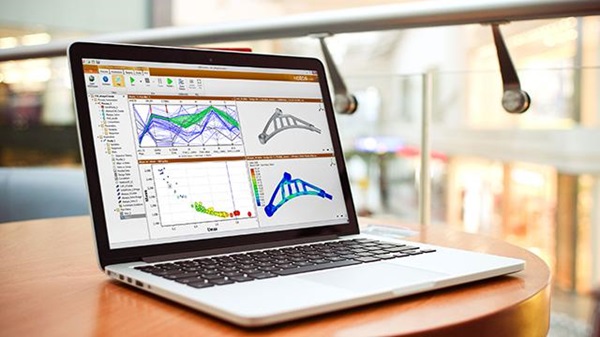
The design analysis software in STAR-CCM+ allows the user to determine the most appropriate variable values to generate product designs capable of exceptional performance.
This is all thanks to:
Want to learn more about multiphysics simulation with Simcenter STAR-CCM+?
Download the product sheet:
Predict and understand the real-world behavior of electrochemical applications
With electrochemical simulation in Simcenter, you can achieve reduced resistances, minimize degradation, and achieve higher deposition/engraving rates.
This reduces design/operating/maintenance costs while introducing new types of fuel cells, operating ranges, and new innovative processes and materials.
With STAR-CCM+, you will be able to:
- Include customized electrochemical models for various applications
- Simulate the correct electrochemical behavior in the real world
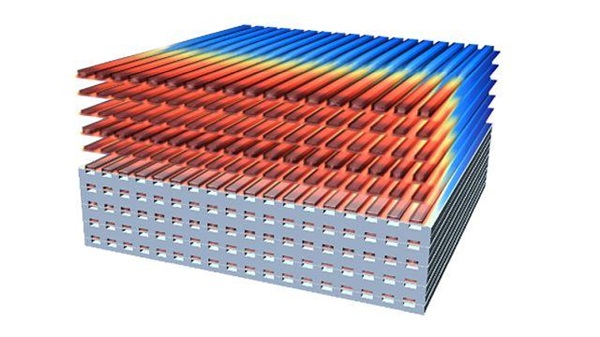
Fluid-dynamic simulation
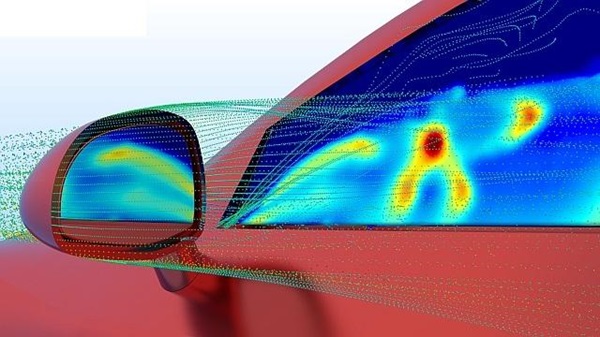
The actual performance of the product depends on how it interacts with fluids, i.e., gases, liquids, or a combination of both, so it becomes necessary to predict the behavior of such fluids and be able to harness that influence to the product's advantage.
STAR-CCM+ is the industry-leading computational fluid dynamics solution for simulating almost any design problem involving fluids, structures, and all associated physics.
Reducing the approximation and increasing the accuracy of the engineering simulation by taking into account all the physics that influence the real-world behavior of your product
STAR-CCM+ is the industry-leading computational fluid dynamics solution for simulating almost any design problem involving fluids, structures, and all associated physics.
Reducing the approximation and increasing the accuracy of the engineering simulation by taking into account all the physics that influence the real-world behavior of your product
Motion simulation within CFD simulation in a single environment
Within a single CFD software environment, Simcenter allows users to simulate not only a wide range of physics, but also a wide range of body and network movements to accurately capture physics. With motion models for CFD simulations, you can simulate the real-world performance of moving objects.
Thanks to STAR-CCM+, you will be able to:
- Understand body behavior in any flow field by creating bodies that can move due to fluid forces and constraining them in any direction
- Simulate surfaces that change shape/position and check for any deformations
- Simulate applications such as painting, vehicle flooding, rudders and port drives
- Simulate the behavior of pumps, valves, drill bits, marine ships, aerospace control surfaces, mixers, compressors, etc.
- Simulating motion behavior at low computational cost when the inflow is fairly uniform and constant
- Simulate the movement of the rigid body. and much more...
Multi-stage simulation will allow you to create custom products without difficulty
Real-world engineering problems cover moreù flow regimes through layered, dispersed, discrete films, etc.
To date, there is no single multiphase model that can cover all regimes; however, Simcenter provides a full range of models that can be used together to cover many flow regimes, including transitions between them. Predict and understand the real behavior of your products by simulating multi-phase, multi-regime, and multi-scale flows.
The analyses possible with STAR-CCM+ are:
- Cavitation
- Discrete Element Method (DEM).
- Multi-phase dispersion (DPM).
- Multi-phase Eulerian (EMP).
- Multi-phase Lagrangian (LMP).
- Interaction between Multi-phase models. and much more…
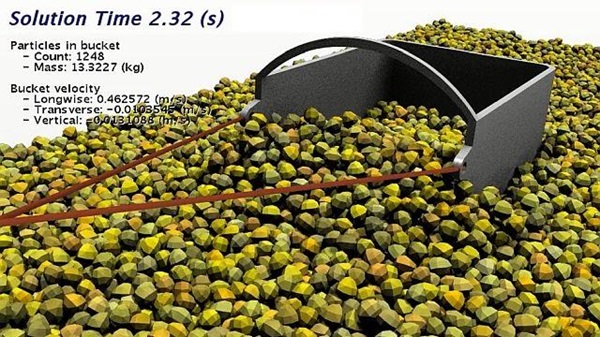
The simulation of particle flows
Particle flows in engineering exist everywhere: fluid beds, cyclone separators, liners, conveyors, roasters, and more.
Whether for lean or dense particle flows, Simcenter STAR-CCM+ is the first CAE instrument to have complete particle flow integration to maximize particle efficiency and distribution, minimize energy consumption, avoid excessive wear and abrasion, and optimize overall performance.
You can then simulate:
- Discrete Element Method (DEM).
- Multi-phase Lagrangian (LMP).
- Boundary types and particle movement.
- Multi-physics of particles
- Particle-fluid interaction.
- Multiple particle injectors
Reagent flow analysis solution
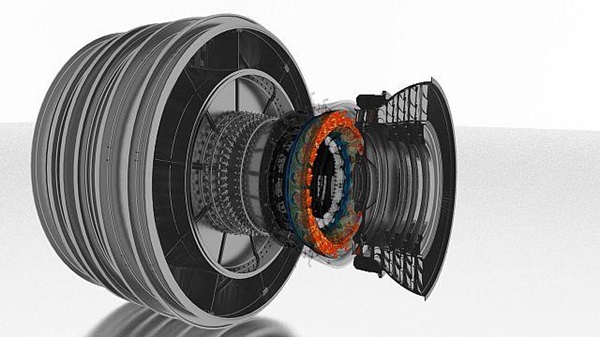
Simcenter STAR-CCM+ offers a comprehensive suite of emission and reactant flux models, allowing the combination of reactant flux models with heat transfer, irradiation, multiphase reactions, and surface chemistry.
Through this solution, it becomes possible to predict and understand factors such as flame dynamics, heat transfer, heat-related wear, emissions, efficiency, conversion, selectivity, selectivityà and undesirable conditions, to accurately capture the actual physical conditions of designs.
The analyses possible with STARCCM+ are:
- Flame Models
- Multi-phase and surface reaction.
- Reagent flow transport models.
- Reaction and combustion models
Simulate fluids dominated by diffusion and viscous or visco-elastic behavior
With STAR-CCM+, it is possible to simulate fluids dominated by diffusion and viscous or viscoelastic behavior.
This method is useful for engineers in consumer products, waste treatment, and the food and beverage industry who work with mixers, flow containers, slurries, extrusions, and materials processing.
Accurate rheology simulation is the key to reducing energy consumption, emissions and raw material use, improving product reliability, user experience, and liability costs.
Thanks to the Siemens solution, you can:
- Choose which Constitutive Laws to apply.
- Import experimental data and the solver finds the best/optimized parameters based on the user’s choice
Thermal simulation of products
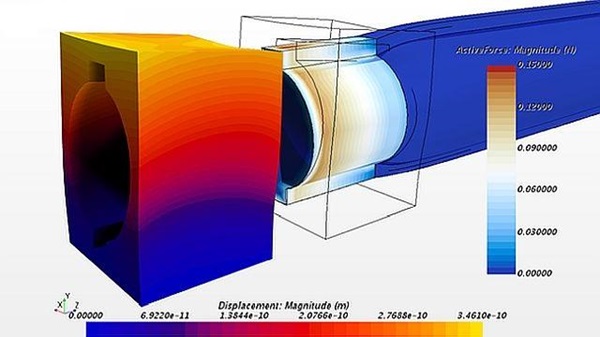
Thermal management is a key issue for a wide range of products, including those belonging to the industrial mechanical, automotive, and consumer electronics sectors. All thermal management solutions aim to maintain product temperature within an optimal range for performance.
STAR-CCM+ includes exhaustive state-of-the-art thermal simulation capabilities, which allow you to understand the thermal characteristics of the product and then adapt the thermal management solution to optimize performance.
The types of thermal simulation possible are:
- Conducting
- Irradiation
- Convection
- Phase Change.
- Heat transfer in solids.
- Heat Exchangers
- Thermal Stress.
- Boiling
Simcenter STAR-CCM+ customer testimonials
The video presents the experiences and the advantages of using Simcenter STAR-CCM+ for multiphysics and CFD simulation.
The interviewees tell how the software has improved their companies' competitiveness through high-fidelity simulations, speeding up product development, reducing costs, and increasing the accuracy of results. The breadth of available physical models, flexibility of the platform, ease of use of the GUI, support for VR technologies, and integration with HPC environments are highlighted.
The video also highlights the high level of technical support provided and the positive impact on time-to-market and overall design and simulation efficiency.
Request more information or your custom quote