Rapid and constant technological evolution represents an opportunity for manufacturing companies to invest in technologies that drive digital transformation.

To facilitate digital transformation, one of the key enabling factors is the creation of cloud-based infrastructures and software management systems that allow companies to stay securely and efficiently connected at all times, maintain high-quality standards, and reduce the costs of maintaining and updating software solutions.
More and more often we hear about Cloud, but what is it?

The term "Cloud" refers to servers that are accessed via the Internet, as well as the software and databases that run on those servers.

Thanks to cloud computing, users and companies no longer need to manage physical servers or run software applications on their local workstations. This is made possible by virtualization, which creates a simulated and entirely digital computing environment.

Choosing cloud technologies and infrastructures eliminates fixed IT costs, such as those related to upgrading and maintaining servers and physical workstations.
 Mano che tiene un tablet con un'icona di cloud computing sospesa sopra
What are the advantages of the Cloud?

The cloud enables companies to manage the ever-increasing complexities of the modern industrial landscape, such as:
  • Globalization: The globalization of trade and business requires companies to have infrastructure and data available anywhere in the world.
  • Connection and efficiency: Data is available at any time and accessible from any location.
  • Security and speed: Data is protected against hacker attacks and human errors, while users can access it instantly.
  • Personalization: Each company can create its own cloud infrastructure according to its specific needs and processes.
  • Economic and environmental sustainability: Cloud adoption reduces hardware costs and lowers environmental impact
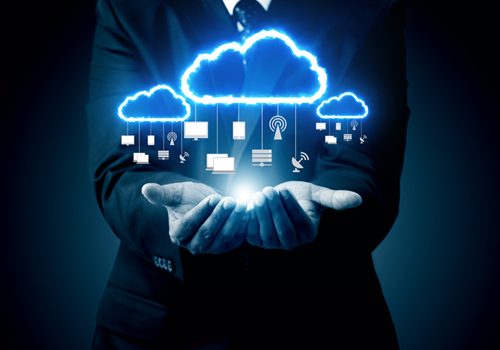
Immagine di un uomo in abito che tiene nelle mani un'icona di cloud computing con diverse icone di dispositivi sospese
The difference between: SaaS, XaaS and Subscription

Among the choices a company must make to enable Cloud technology, in addition to the provider of the virtual space, is the methodology for providing licenses for the PLM.
 
There is a need for clarity between terms that we are increasingly hearing, coupled with the Cloud:

  • SAAS (Software As A Service): software licensed to a user and accessible via the Internet. The data resides with the service provider, who is responsible for security, performance and maintenance.

  • XAAS (Xcelerator As A Service): Siemens Digital Industries Software licensing strategy that offers the customer hybrid adoption of some products in Cloud SaaS model and others installed locally, the data residing partly at the service provider and partly at the customer's site with shared responsibility.

  • SUBSCRIPTION: a monthly or annual term license in which the software is installed on-premises.
Immagine di un computer portatile con una rappresentazione digitale del cloud computing sullo schermo
Siemens Digital Industries Software's PLM in the Cloud – Teamcenter.
Within this shared network space, it is possible to manage the entire cycle of life of the product, from design to production, with the possibility of making changes and managing the bill of materials. 

Teamcenter is the PLM solution from Siemens Digital Industries Software, also usable in the Cloud, that enables companies to create a totally secure digital journey of their product/project data by connecting people and processes and breaking down barriers between different functions.
 
Despite its simple and intuitive interface, Teamcenter ensures control of all processes and data regarding products such as electronic aspects, embedded software, documentation, and BOMs while also ensuring collaboration between departments.
Un razzo che decolla attraverso le nuvole

PLM in the Cloud enables manufacturing companies to:

  • Create Digital Twin of its products encompassing all business development domains without territorial, language barriers
  • Obtain a shared environment among engineering departments, which fosters co-design
  • Creating an open, flexible, adaptable and modern
  • business ecosystem.
Siemens Digital Industries Software's SaaS Strategy.

A solution SaaS (Software as a Service) provides accessibility , scalability And flexibility to make standardized technology available to these distributed users.

SaaS technology tools and cloud capabilities enable and create interconnections, facilitating collaboration between company departments.

The concept of SaaS falls outside the classical definition of software in that it allows access to a “service” 360°.
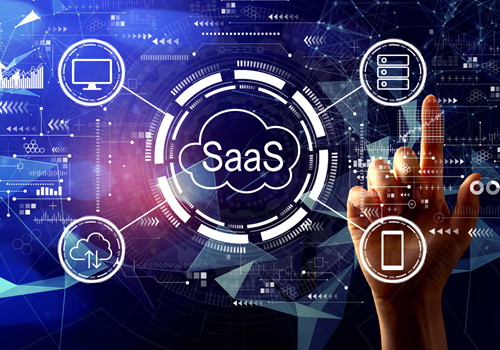
Solid Edge in SaaS (Software as a Service)

Solid Edge offers the cloud capabilities needed to ensure easy access to professional 3D CAD from different devices and allows the user to instantly configure the CAD environment according to personal preferences.

Solid Edge in SaaS enables you to quickly share data across all design resources, as well as with customers and suppliers.

Thanks to its compatibility with cloud infrastructures, Solid Edge requires minimal support from the corporate IT department and frees employees from daily activities dedicated to systems maintenance, allowing focus on design and development activities.
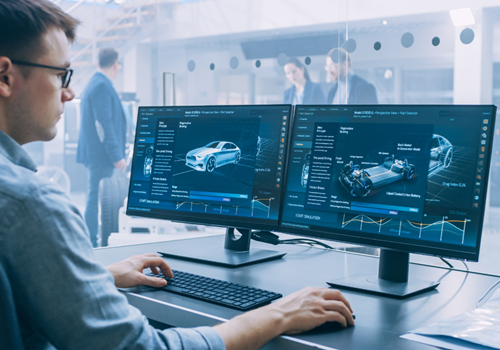
The Benefits of Solid Edge CAD in SaaS (Software as a Service):
Virtual Desktop Infrastructure (VDI)

For VDI (Virtual Desktop Infrastructure), it means: a technology that allows you to create virtual desktops that business users can view on their own client, without the information and data being physically present on the client itself.

VDI Infrastructure in the Cloud consists of a centralized server that hosts virtual desktops and distributes them to end users on demand. Access is made possible thanks to the network from any device (laptop, tablet, smartphone, etc.) or operating system.

The main advantages of Virtualization Of the Desktop (VDI):

  • Reduced hardware costs in the face of continuous software updating and data security
  • Remote access: users can connect to their virtual desktop from any location or device
  • Cost savings: Because operations are performed server-side, users, can access their virtual desktop from even less up-to-date devices
  • Centralized management: the centralized model allows IT departments to install security patches, update and configure dedicated hardware resources without difficultyà and
  • Security: since the data is stored directly on the server, it remains protected
  • in case of theft or failure.

The Virtual Data Center (VDC)

The Virtual Data Center (VDC) is the virtual version of the physical data center, which allows companies to no longer have a physical server room, thus eliminating infrastructure management, thanks to a cloud architecture and a cloud provider (Cloud service provider).

Companies that choose a VDC (Virtual Data Center) can freely customise their infrastructure, following the fundamental pillars of their business, making it possible to expand the infrastructure over time and without limits.
Siemens Digital Industries Software's Cloud Proposal

Var Industries as a Platinum Partner of Siemens Digital Industries Software offers Cloud PLM solution based on AWS (Amazon Web Services) Cloud architecture.

Siemens and AWS share responsibility for infrastructure and data security, operations, and Siemens' AWS architecture is regularly reviewed with AWS staff for: cybersecurity, privacy, performance, and reliability.

Var Group's Private Cloud Proposal
Logo image

Var Group brings to the market the Private Cloud proposal.

This offering allows the customer to have a direct relationship with the Cloud Provider, streamlining configuration operations and guaranteeing high performance, security, and timely response.

Var Group owns a private data center on national territory; the goal is to ensure that its customers have their data “at their fingertips” and physically safe.

Request more information or your custom quote:
I agree to receive commercial and promotional communications regarding Var Industries S.r.l.'s own services and products, as well as informational messages related to the institutional activities of Var Group S.p.A.
I consent to the communication of my personal data to the companies belonging to the Var Group S.p.A. business group, in order to receive commercial and promotional communications related to the services and products owned by the aforementioned companies, as well as informational messages related to the institutional activities of these companies.
I consent to the disclosure of personal data to third-party companies (belonging to ATECO J62, J63 and M70 product categories concerning IT and business consulting products and services).